





Blog
Flake Ice Machines in Florida: Saltwater Ice vs Freshwater Ice. The Complete Guide for Yachts, Sportfishers & Pleasure Boats

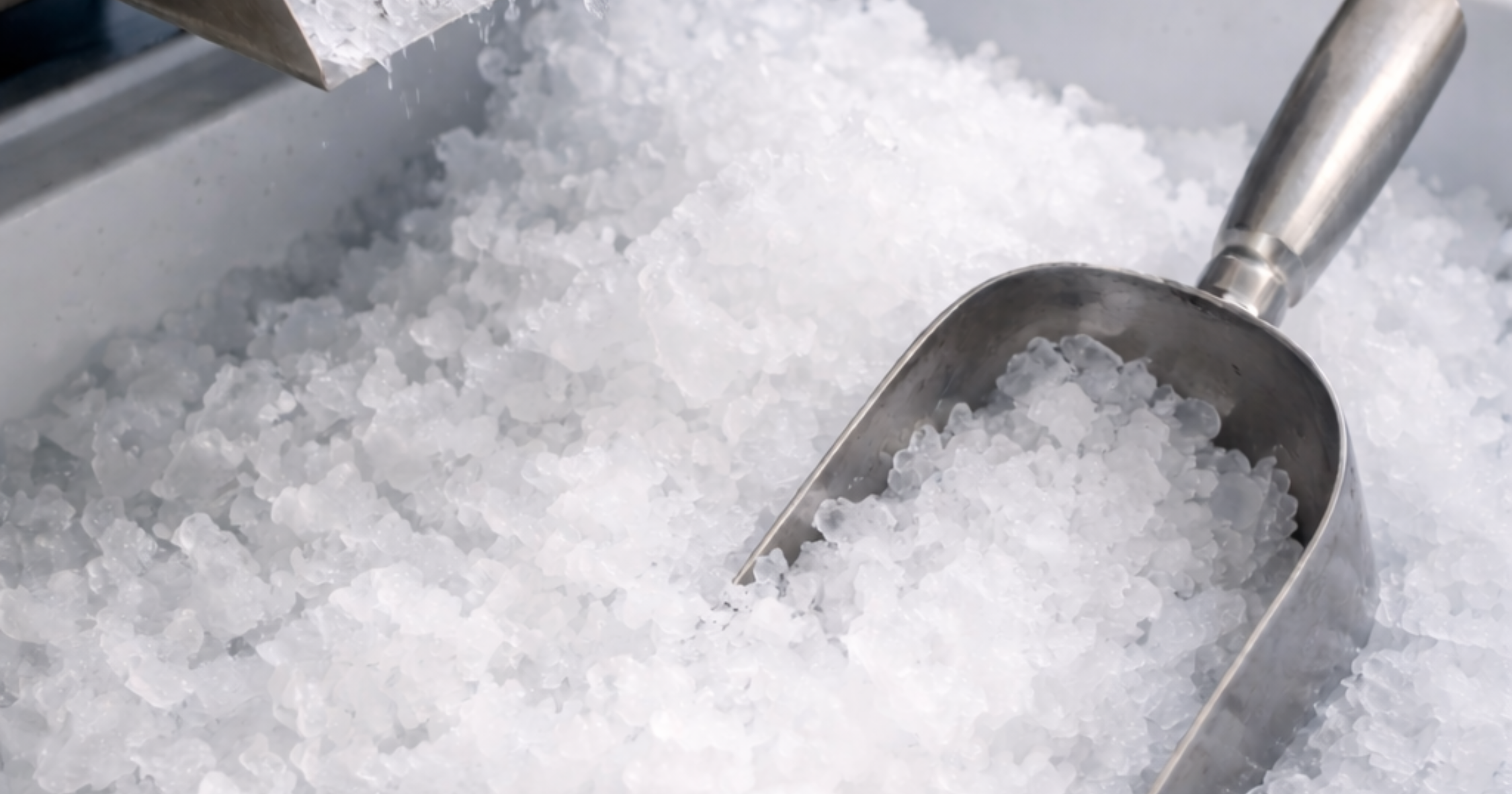
Marine Flake Ice Machines in Florida for Yachts, Sportfishers & Pleasure Boats
Florida boating operates in one of the most demanding marine climates in the United States. Whether cruising from Fort Lauderdale, fishing offshore out of Miami, or running long-range trips near Key West, heat and humidity directly affect onboard storage conditions.
For yachts, sportfishing boats, and pleasure vessels, a marine flake ice machine provides reliable temperature control for fish preservation, beverage cooling, and food safety.
This guide explains how marine flake ice systems work, why saltwater ice can improve fish quality, what refrigerant changes mean for 2026 and beyond, and how to choose the right system for your vessel.
What Is a Marine Flake Ice Machine?
A marine flake ice machine is a boat-specific refrigeration system that produces thin, soft ice flakes for rapid cooling onboard.
Unlike cube ice machines, flake ice systems:
- Operate continuously
- Produce high-surface-area ice
- Cool faster
- Reduce air gaps in coolers
- Maintain more consistent internal temperature
Because flake ice molds around fish and beverages, it transfers cold more efficiently than cube ice.
Why Flake Ice Performs Better Than Cube Ice on Boats
The performance difference between flake ice and cube ice comes down to surface contact and cooling efficiency.
Flake ice fills gaps, conforms to fish and beverage containers, and provides uniform temperature distribution. Cube ice leaves air pockets that reduce cooling efficiency and increase melt rate.
Flake Ice vs Cube Ice: Performance Comparison
| Feature | Flake Ice | Cube Ice |
|---|---|---|
| Cooling Speed | Faster | Slower |
| Surface Contact | High | Limited |
| Fish Protection | Excellent | Moderate |
| Air Gaps in Cooler | Minimal | Common |
| Temperature Stability | Consistent | Variable |
In Florida’s high ambient temperatures, faster cooling directly improves fish preservation and stabilizes onboard storage conditions.
Freshwater vs Saltwater Flake Ice Systems
Boat owners frequently ask:
Is saltwater ice better than freshwater ice for fish storage?
The answer depends on intended use.
Freshwater Flake Ice
Best suited for:
- Beverage service
- Galley use
- Guest hospitality
- General onboard cooling
Freshwater ice is preferred when taste and presentation are priorities.
Saltwater Flake Ice
Best suited for:
- Offshore fishing
- Extended trips
- Preserving freshwater tank reserves
Why Saltwater Ice Can Preserve Fish Quality Longer
Fisheries research has shown that saltwater ice can help maintain fish quality longer than freshwater ice.
Marine fish naturally exist in a saline environment. When packed in saltwater ice, the salinity more closely matches the fish’s natural cellular environment. This reduces osmotic stress on the flesh and helps:
- Maintain natural moisture content
- Preserve weight
- Retain color
- Protect firm texture
- Slow visible deterioration
When fish are stored in freshwater ice, the difference in salinity may contribute to faster moisture migration over time. Freshwater ice still slows decay significantly compared to no ice at all, but saltwater ice can offer an advantage during longer offshore runs.
For Florida sportfishing vessels operating far offshore, the ability to produce saltwater flake ice may provide improved preservation performance.
How a Marine Flake Ice Machine Works
A typical marine flake ice system includes:
- Evaporator drum
- Auger or scraper mechanism
- Refrigeration compressor
- Water supply system
- Ice discharge chute
Operating sequence:
- Water enters the evaporator drum.
- Refrigerant cools the internal surface.
- Ice forms in thin layers.
- The auger continuously scrapes the ice.
- Flake ice is discharged into a bin or cooler.
Continuous production ensures consistent ice supply throughout the day.
Ice Production Capacity (Lbs Per Day)
Marine flake ice machines are rated by daily ice production capacity, typically measured in pounds per day (lbs/day).
Common production ranges include:
- 800 lbs per day
- 1200 lbs per day
Selecting the correct size depends on:
- Vessel size
- Trip duration
- Passenger count
- Fishing frequency
- Cooler capacity
In Florida conditions, slightly oversizing ice production capacity is often recommended to compensate for higher melt rates.
Refrigerant Types: R404A vs R290 (2026 Industry Update)
Marine flake ice machines have traditionally used R404A refrigerant, which has been widely adopted in refrigeration systems for many years.
However, due to updated environmental regulations and government mandates, the industry is rapidly transitioning toward R290 refrigerant.
As of January 2026, compressor manufacturers are shifting production to R290-compatible compressors in response to these regulatory changes.
Why the Industry Is Moving to R290
R290 offers:
- Significantly lower Global Warming Potential (GWP)
- Improved environmental compliance
- Increased long-term regulatory stability
- Strong performance efficiency
Because of this shift, newer marine ice machines may use R290 instead of R404A.
Boat owners considering installation should confirm:
- Which refrigerant the system uses
- Availability of qualified service technicians
- Long-term parts compatibility
Understanding refrigerant type ensures future-proof compliance and serviceability.
Marine Construction & Electrical Considerations
Marine-grade ice machines are engineered to withstand:
- Continuous vibration
- Salt air exposure
- High humidity
- Offshore operation
Key features often include:
- Corrosion-resistant stainless steel components
- Soft-start electrical control systems
- Proper breaker sizing requirements
- Ventilation clearance planning
Electrical compatibility must always be verified prior to installation.
Installation Considerations for Florida Boats
Before installing a marine flake ice machine, confirm:
- Dedicated electrical circuit availability
- Ventilation airflow
- Freshwater or seawater supply access
- Proper drainage routing
- Maintenance accessibility
Professional marine installation is recommended to protect both the vessel and the system.
Dual Freshwater & Saltwater Capability
Some marine flake ice systems are designed to operate using either freshwater or seawater.
This flexibility allows:
- Freshwater ice for beverages and galley use
- Saltwater ice for fish preservation
- Reduced freshwater consumption offshore
For Florida yachts and sportfishing boats, dual-capability systems provide operational versatility.
To explore marine flake ice systems designed for yachts and sportfishers, visit:
https://yachtmate.com/product-category/flaked-ice/
Common Mistakes When Choosing a Marine Ice Machine
- Selecting cube ice instead of flake ice for fish storage
- Underestimating required lbs per day
- Ignoring refrigerant updates
- Installing without proper ventilation
- Not considering saltwater capability
Proper planning improves long-term performance and reliability.
Frequently Asked Questions
What is a flake ice machine used for on a boat?
A flake ice machine produces thin, soft ice flakes used to cool fish, beverages, and food quickly and efficiently onboard yachts and sportfishing boats.
Is flake ice better than cube ice for fish?
Yes. Flake ice cools faster, reduces air gaps, and protects fish texture better than cube ice.
How much ice does a marine flake ice machine produce?
Marine systems commonly produce between 800 and 1200 lbs of ice per day, depending on model size and specification.
Can a marine flake ice machine use seawater?
Some systems are designed to use seawater, allowing offshore ice production without consuming freshwater reserves.
What breaker size is required for installation?
Breaker size depends on the specific model and voltage configuration. Always confirm electrical specification before installation.
Is saltwater ice better than freshwater ice on boats?
Saltwater ice and freshwater ice each serve different purposes onboard, but saltwater ice can offer advantages for fish preservation.
Freshwater freezes at 32°F (0°C), while average seawater (about 3.5% salinity) freezes at approximately 28.4°F (-2°C). Because saltwater freezes at a lower temperature, it behaves differently during melting and can remain effective at slightly lower temperature ranges.
For fish storage, saltwater ice more closely matches the natural saline environment of marine fish. This reduces osmotic stress on the flesh and can help:
– Maintain natural moisture
– Preserve weight
– Retain color
– Protect texture
– Slow visible deterioration
Freshwater ice still significantly slows decay compared to no ice at all and is ideal for beverage service and galley use. However, over extended storage periods, the difference in salinity may contribute to faster moisture migration from the fish compared to saltwater ice.
For Florida yachts and sportfishing boats:
– Use freshwater ice for drinks and hospitality.
– Use saltwater ice for offshore fish preservation and conserving freshwater tank capacity.
The most versatile marine flake ice systems allow production of both, depending on the vessel’s needs and trip profile.
Where can I buy flake ice makers near me?
Flake ice makers for boats should be purchased from marine equipment specialists rather than residential appliance suppliers. Marine-grade ice machines are designed to withstand vibration, salt exposure, humidity, and offshore conditions.
When searching for “flake ice makers near me,” look for suppliers that focus specifically on yacht and sportfishing installations, offer proper electrical guidance, and understand freshwater versus seawater production systems.
For boat owners in Florida, marine flake ice machines are available through Yacht-Mate, a Fort Lauderdale–based marine equipment supplier serving yachts and sportfishing vessels throughout the state. You can view available models here:
https://yachtmate.com/product-category/flaked-ice/
Final Thoughts
For Florida yacht owners and sportfishing enthusiasts, a flake ice machine is not simply a convenience—it is a temperature management system.
Compared to cube ice, flake ice provides:
- Faster cooling
- Better fish preservation
- More efficient cooler use
- Improved beverage service
- Greater onboard independence
When properly sized and professionally installed, a marine flake ice machine enhances both fishing performance and guest experience.
To explore marine flake ice systems designed for yachts and sportfishers, visit:https://yachtmate.com/product/icesea-ice-maker/