

Blog
How to Choose the Right Watermaker for Your Boat

The Complete Guide for Yacht Owners
Fresh water is one of the most important resources onboard any yacht or boat. Whether you are cruising offshore, sailing long passages, or enjoying extended time at anchor, having a reliable water source can completely change your experience at sea.
This is where a marine watermaker system becomes essential.
Modern watermakers allow yacht owners to turn seawater into clean, drinkable water using a process called reverse osmosis desalination. Instead of relying on limited tank capacity or expensive marina water supplies, a properly sized watermaker for your boat provides independence, convenience, and safety.
However, choosing the right watermaker can be confusing. There are many different models, production capacities, and technical specifications to consider.
In this guide, we will explain:
- How marine watermakers work
- How to calculate the amount of water your boat needs
- Key factors to consider when choosing the right watermaker
- Differences between systems for smaller boats and larger yachts
- Maintenance tips for a reverse osmosis water system
- Frequently asked questions yacht owners ask about boat watermakers
By the end of this article, you will understand exactly how to choose the best watermaker for your yacht.
What Is a Marine Watermaker?
A marine watermaker is a desalination system designed specifically for boats and yachts. It converts salt water from the ocean into potable water that can be used for drinking, cooking, showering, and washing.
Watermakers use a process called reverse osmosis, where seawater is pushed through a RO membrane at extremely high pressure. This process removes salt and impurities, leaving only pure water molecules.
The system separates the incoming seawater into two streams:
- Fresh drinkable water (product water)
- Waste water (brine)
The result is a steady supply of clean water onboard your yacht.
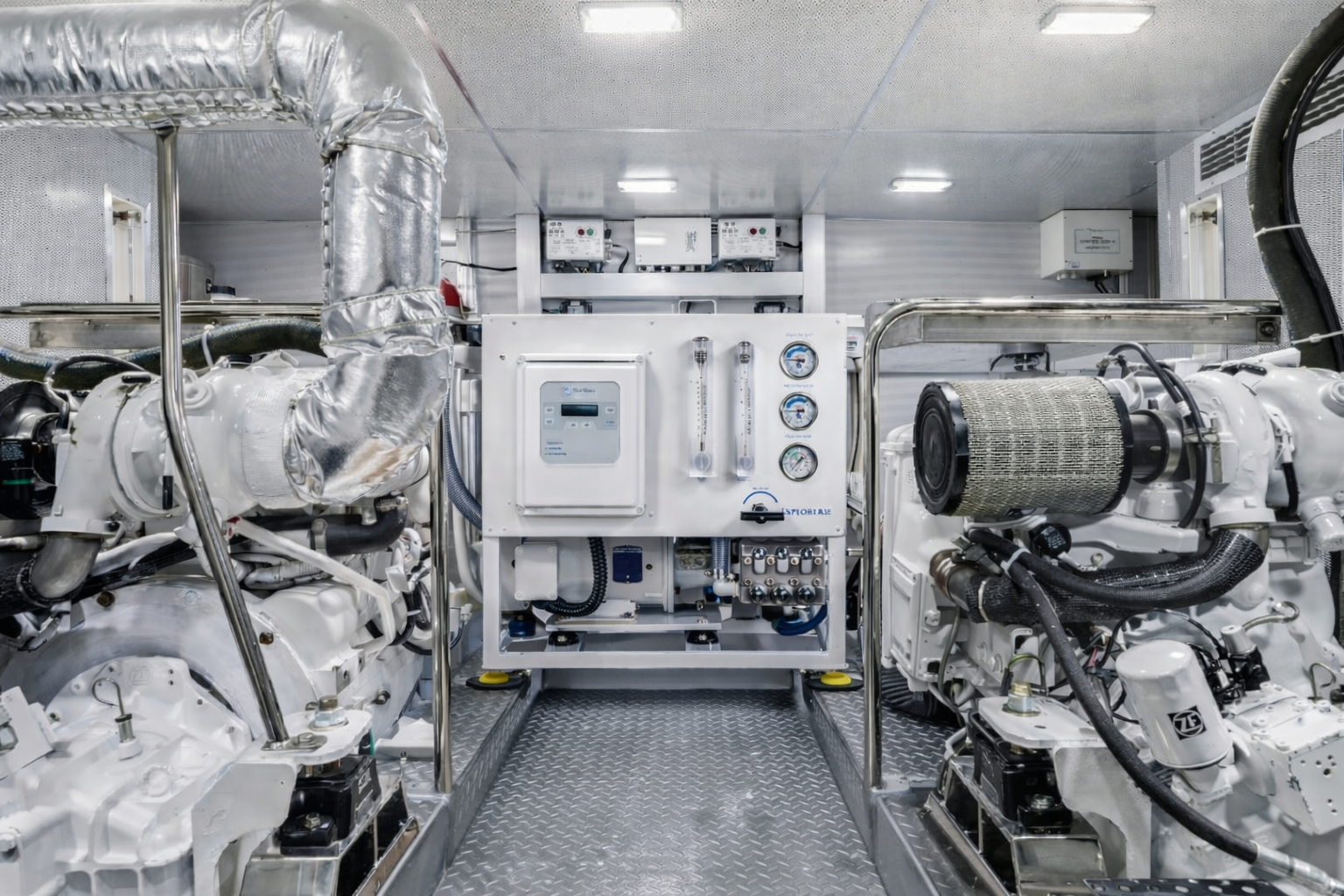
Watermakers are commonly installed in the engine room or utility space where they connect to the boat’s water system and water tanks.
How Boat Watermakers Work
Understanding how watermakers work helps yacht owners choose the right model for their needs.
The process is simple but highly engineered.
1. Feed Water Intake
The system draws sea water through a seawater intake.
This incoming water is called feed water.
Before entering the desalination system, the feed water passes through pre-filters that remove sand, algae, and particles.
2. High Pressure Pump
Next, a high-pressure pump increases the pressure of the seawater dramatically.
Reverse osmosis requires extremely high pressure because it must force water molecules through the microscopic pores of the RO membrane.
This pressure is what allows the system to separate pure water molecules from salt and impurities.
3. Reverse Osmosis Membrane
Inside the system is the RO membrane, the heart of the watermaker.
The membrane allows only water molecules to pass, while rejecting:
- Salt
- Minerals
- Bacteria
- Contaminants
- Impurities
The membrane effectively performs water purification at a molecular level.
4. Fresh Water Production
The water that successfully passes through the membrane becomes drinkable water.
This purified water is sent directly to your water tanks, supplying your boat with fresh water.
5. Waste Water Discharge
The remaining concentrated seawater containing salt and impurities becomes waste water, which is discharged overboard.
Why Yacht Owners Install Watermakers
There are several reasons why watermakers are becoming standard equipment on modern yachts.
Independence From Marinas
A watermaker allows you to produce your own fresh water anywhere.
This is especially valuable for:
- Long-distance cruising
- Remote anchorages
- Offshore sailing
- Island hopping
Unlimited Fresh Water Supply
With a watermaker onboard, you can generate many gallons of water per hour.
This means more freedom to:
- Shower
- Wash dishes
- Clean decks
- Enjoy longer stays at sea
Reduced Dependence on Water Tanks
Without a watermaker, yachts rely entirely on water tank capacity.
Watermakers reduce the need for large tanks, freeing valuable space onboard.
Improved Water Quality
Many marina water supplies contain contaminants or unpleasant tastes.
A good watermaker produces high-quality clean water.
Choosing the Right Watermaker for Your Boat
Selecting the right watermaker involves several important considerations.
Yacht owners must evaluate:
- Water usage
- Boat size
- Available space
- Power consumption
- System capacity
Let’s explore each factor.
Calculate the Amount of Water Your Boat Needs
The first step is determining your daily water requirements.
Typical onboard water usage includes:
- Drinking water
- Cooking
- Showers
- Washing dishes
- Cleaning
A rough estimate is 30–50 liters per person per day.
For example:
| Crew | Daily Water Needed |
|---|---|
| 2 people | 60–100 liters |
| 4 people | 120–200 liters |
| 6 people | 180–300 liters |
Your watermaker production rate must meet or exceed this demand.
Understanding Watermaker Production
Watermakers are typically rated in:
- Liters per hour
- Gallons per hour
A common cruising watermaker might produce:
- 60 liters per hour
- 120 liters per hour
- 250+ liters per hour
Larger yachts may install two watermakers to ensure redundancy and higher water production.
Watermakers for Smaller Boats
Watermakers designed for smaller boats and sailboats prioritize:
- Compact size
- Lower power consumption
- Simpler installation
Compact watermakers often produce:
- 30–60 liters per hour
They are ideal for:
- Sailboats
- Small cruising boats
- Fishing boats
Watermakers for Larger Yachts
Larger yachts require higher water output.
Luxury yachts with multiple guests often install systems producing:
- 200–500 liters per hour
These systems ensure enough water onboard for showers, laundry, and galley operations.
Many larger yachts install dual watermakers for reliability.
Available Space Onboard
Before installing a watermaker, consider the available space in your engine room.
Watermaker systems include:
- High-pressure pump
- RO membrane housing
- Filters
- Control panel
Some systems are modular, allowing flexible installation.
Others come as compact all-in-one units.
Power Requirements
Watermakers require energy to operate the high-pressure pump.
Power options include:
- AC electric watermakers
- DC powered systems
- Engine-driven systems
Some yachts also use solar panels to power smaller watermakers.
Energy efficiency is an important factor when selecting the right system.
Key Components of a Marine Watermaker System
A typical watermaker includes several important components.
High Pressure Pump
Generates the pressure required for reverse osmosis desalination.
RO Membrane
Separates pure water molecules from salt and impurities.
Pre Filters
Remove debris before water enters the membrane.
Control Panel
Monitors pressure, flow rate, and system operation.
Fresh Water Flush System
Flushes the membrane with clean water after use to extend membrane life.
Maintenance Tips for Reverse Osmosis Water Systems
Maintaining a watermaker ensures reliable performance and long lifespan.
Important maintenance practices include:
Replace Pre-Filters Regularly
Clogged filters reduce performance and increase pump strain.
Fresh Water Flush
Always flush the system after operation.
This prevents salt buildup inside the membrane.
Monitor Pressure Levels
Incorrect pressure can damage the membrane.
Regular Membrane Cleaning
Periodic chemical cleaning removes scaling and biological growth.
Environmental Factors Affecting Watermaker Performance
Several environmental conditions can influence system performance.
Water Temperature
Colder water reduces production.
Salinity Levels
Higher salt levels require more pressure.
Water Quality
Dirty or polluted water can clog filters faster.
Reverse Osmosis Desalination Explained
Reverse osmosis desalination is one of the most efficient water purification technologies available.
The process forces seawater through a semi-permeable membrane, allowing only pure water molecules to pass.
The result is clean water suitable for drinking and cooking.
This technology is used not only in marine watermakers but also in:
- Municipal desalination plants
- Industrial water purification systems
- Emergency drinking water systems
Common Watermaker Installation Locations
Watermakers are typically installed in:
- Engine rooms
- Utility compartments
- Technical spaces
Proper installation ensures easy maintenance and access to filters and pumps.
Signs You Need a Watermaker Upgrade
Your current watermaker may need replacement if you experience:
- Reduced water production
- Frequent membrane clogging
- High maintenance costs
- Inconsistent water quality
Upgrading to a modern system improves reliability and efficiency.
How to Find the Best Watermaker for Your Yacht
When selecting the best watermaker, consider:
- Water production capacity
- System reliability
- Ease of maintenance
- Energy efficiency
- Available service support
Working with a trusted marine supplier ensures proper installation and long-term performance.
Frequently Asked Questions About Boat Watermakers
Best watermaker systems for small to mid-size boats
The best watermaker systems for small to mid-size boats are compact reverse osmosis marine watermakers producing between 30 and 120 liters per hour. These systems balance water production, energy consumption, and available installation space. Suppliers such as Yacht-Mate offer a range of compact marine watermakers designed specifically for sailboats, cruising yachts, and smaller motor vessels.
How do boat watermakers work?
Boat watermakers use a desalination process called reverse osmosis. Seawater is drawn into the system as feed water, filtered, and then pushed through a RO membrane under high pressure. The membrane allows only pure water molecules to pass while rejecting salt, minerals, and impurities, producing clean drinkable water onboard.
How do marine watermakers work on sailboats?
Marine watermakers on sailboats work the same way as systems used on motor yachts, using reverse osmosis desalination technology. However, sailboat watermakers are often designed with lower power consumption and compact installation layouts, making them suitable for limited engine room space and smaller electrical systems.
What is the average cost of a marine desalinator?
The average cost of a marine watermaker or desalination system typically ranges between $4,000 and $20,000, depending on water production capacity, system design, and installation requirements. Higher-capacity systems used on larger yachts can cost more due to increased output and advanced automation features.
Where to buy compact watermakers for yachts in the US?
Compact marine watermakers can be purchased from specialized marine water treatment suppliers and yacht equipment distributors. Companies like Yacht-Mate offer a range of watermakers and desalination systems designed for boats of all sizes, along with expert guidance to help yacht owners choose the right system.
👉 https://yachtmate.com/product-category/watermakers/
Best compact watermaker for a sailboat
The best compact watermaker for a sailboat should offer efficient water production, low power consumption, and reliable reverse osmosis membranes. Sailboats typically benefit from systems producing 30–60 liters per hour, providing enough freshwater for small crews without placing excessive demand on onboard power systems.
Top rated portable watermakers for fishing boats
Portable watermakers are ideal for smaller vessels such as fishing boats or expedition boats that require occasional freshwater production. These systems are compact and easy to install, providing a convenient way to convert seawater into drinkable water when extended trips or remote fishing grounds require additional freshwater supplies.
Maintenance tips for reverse osmosis water systems on boats
Proper maintenance ensures long-term performance of marine watermakers. Boat owners should regularly replace pre-filters, flush the system with fresh water, monitor pressure levels, and periodically clean the RO membrane. Many marine water treatment specialists, including Yacht-Mate, can provide replacement filters, service advice, and system upgrades.
Marine Watermakers from Yacht-Mate
When selecting the right watermaker for your boat, it’s important to choose equipment specifically designed for the marine environment. Saltwater exposure, vibration, and continuous operation place unique demands on onboard desalination systems, so reliability and build quality are critical.
One company specializing in marine water treatment solutions is Yacht-Mate, a trusted provider of water systems for yacht owners, captains, and marine engineers around the world.
Yacht-Mate offers a wide range of marine watermakers designed for boats and yachts of all sizes, from compact units suitable for sailboats to high-capacity desalination systems used on larger motor yachts and commercial vessels.
You can explore the full range of systems here:
👉 https://yachtmate.com/product-category/watermakers/
These systems use advanced reverse osmosis desalination technology, converting seawater into clean potable water that can be safely used for drinking, cooking, showers, and onboard cleaning.
Professional Watermaker Systems for Boats and Yachts
The watermaker solutions available through Yacht-Mate are designed to meet the varying freshwater needs of different vessels.
Typical systems include:
- Compact watermakers for smaller boats and sailboats
- Mid-capacity systems for cruising yachts
- High-output desalination systems for larger motor yachts
Depending on the model, some watermakers are capable of producing hundreds to thousands of gallons of freshwater per day, ensuring that even vessels with larger crews have a reliable water supply onboard.
This flexibility allows yacht owners to choose systems that match:
- Crew size
- Daily water usage
- Available installation space
- Power capacity onboard
Many systems are also modular, meaning components can be installed separately if space in the engine room is limited.
Complete Onboard Water Solutions
In addition to watermakers, Yacht-Mate also offers a full range of marine water treatment solutions designed to improve water quality throughout your vessel.
These include:
- Marine water filtration systems
- Reverse osmosis drinking water systems
- UV sterilization systems
- Water softeners
- Galley drinking water purification systems
Together, these technologies help create a complete onboard water management system, ensuring high-quality freshwater across the yacht’s plumbing system.
Expert Guidance for Yacht Owners
Selecting the best watermaker for your yacht often depends on several factors, including water consumption, available space, power supply, and cruising plans.
Working with marine water system specialists can help yacht owners select the most appropriate system and ensure proper installation for reliable long-term operation.
With the right desalination system installed, yacht owners can enjoy greater independence at sea and a consistent supply of clean drinking water wherever they travel.
Final Thoughts: Selecting the Right Watermaker
Choosing the right watermaker for your boat is one of the most valuable upgrades you can make as a yacht owner.
A properly selected marine watermaker provides:
- Reliable freshwater production
- Independence from marina supplies
- Greater comfort during long voyages
- Improved onboard water quality
By understanding how watermakers work, calculating your daily water requirements, and selecting a system suited to your yacht’s size and power capacity, you can ensure a reliable supply of clean, drinkable water wherever you sail.
If you would like to understand the full process in more detail, you can also read our guide on how yachts make fresh water, which explains the different systems used onboard modern yachts to produce clean drinking water.
https://yachtmate.com/how-do-yachts-make-fresh-water/
Most marine watermakers rely on reverse osmosis technology. For a deeper look at how this process works, read our article on reverse osmosis water systems on yachts and boats explained, which breaks down the technology behind modern marine desalination systems.
https://yachtmate.com/reverse-osmosis-water-systems-on-yachts-and-boats-explained/
To explore the different types of desalination systems available for vessels today, visit our guide on watermakers and desalination systems using reverse osmosis for yachts and boats, which covers the technology used to convert seawater into fresh drinking water onboard.
https://yachtmate.com/watermakers-desalination-systems-using-reverse-osmosis-for-yachts-and-boats/
Reverse osmosis technology is also widely used in residential and commercial water treatment. If you want to learn more about how these filtration systems work beyond the marine industry, you can explore additional resources at Reverse Osmosis Florida.
https://reverseosmosisflorida.com/