





Blog
Replacing Watermaker Filters onboard: Signs Your Boat Water Filters Need Changing

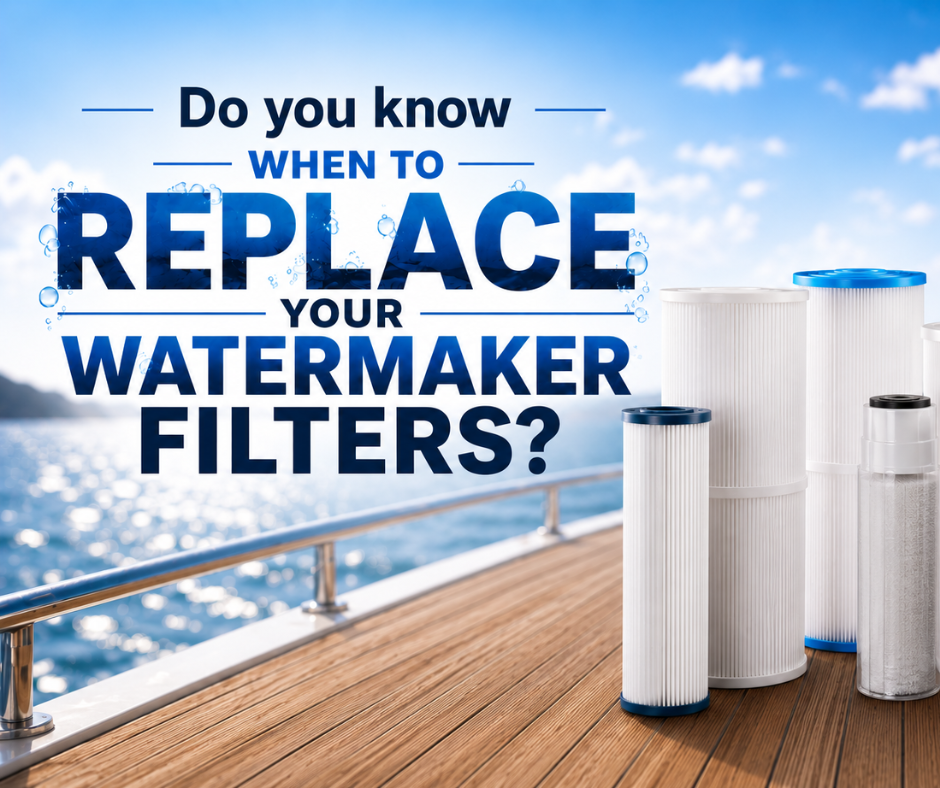
Keep your boat’s watermaker running smoothly. Learn when to change your water filters and get essential maintenance tips for optimal performance.
Replacing watermaker filters at the right time is essential for maintaining water quality, protecting your RO membrane, preventing low pressure issues, and ensuring your watermaker continues to deliver clean drinking water offshore. Signs that your filters need to be replaced include reduced flow rate, dirty water, pressure gauge changes, clogged filter elements, unusual odors, declining water production, and increased strain on the high-pressure pump. Most pre-filters, sediment filters, and carbon block filters should be inspected regularly and replaced according to your manufacturer’s maintenance schedule, especially when cruising offshore or operating in dirty water conditions.
Recommended Yacht-Mate Watermaker Filters & Housings
Keeping spare sediment filters, carbon block filters, and filter housings onboard is essential for every yacht owner. Yacht-Mate offers a wide range of marine-grade water filters, pre-filters, pleated filters, wound filters, and replacement cartridges designed for reliable offshore water purification.
Yacht-Mate Filters & Housings Collection
Why Replacing Watermaker Filters Matters
For many yacht owners and cruisers, a reliable watermaker is one of the most important systems onboard. Whether you are cruising offshore, island hopping through the Bahamas, or spending extended periods at anchor, your watermaker provides the fresh water supply needed for comfort, safety, and independence.
However, even the best reverse osmosis watermaker can quickly develop problems if the filters are neglected.
Replacing watermaker filters is not simply routine upkeep. It is essential preventative maintenance that protects your RO membrane, maintains water quality, improves flow rate, and keeps your entire water purification system operating efficiently.
A clogged sediment filter, dirty pre-filter, or exhausted carbon block filter can reduce water production, strain the high-pressure pump, and eventually damage expensive components inside the RO unit.
The good news is that your watermaker usually provides several warning signs before major problems occur.
Understanding these signs can help you avoid costly repairs while ensuring your watermaker continues to deliver clean drinking water wherever your journey takes you.
Understanding How Watermaker Filters Work
Before identifying when filters need to be replaced, it is important to understand how the filtration system functions.
Most reverse osmosis watermakers use several stages of filtration before seawater reaches the RO membrane.
The Role of Pre-Filters in Water Purification
Pre-filters remove larger particles from seawater before they enter sensitive components.
These filters help protect the RO membrane and high-pressure pump from:
- Sediment
- Organic contaminants
- Saltwater debris
- Large particles
- Dirt and sludge
- Contaminant buildup
Without proper pre-filtration, the RO membrane can clog quickly, dramatically reducing membrane life.
Sediment Filters and Micron Rating Explained
Sediment filters are categorized by micron rating.
A micron is a very small measurement used to determine how fine a filter is.
Common watermaker filter types include:
- 20 micron filter
- 10 micron filter
- 5 micron filter
- 1 micron filter
A 5-micron filter can filter out anything larger than 5 microns, helping remove sediment and suspended contaminants before they reach the membrane.
Finer micron filters improve filtration but clog more quickly, especially in dirty water conditions.
Yacht-Mate stocks multiple sediment filter cartridge options including pleated filters, wound filters, and 5-micron filter elements designed for marine water purification systems.
Carbon Block Filters and Drinking Water Quality
Carbon block filters are commonly used in drinking water systems to improve water quality by removing:
- Chlorine
- Odors
- Organic compounds
- Taste contaminants
These filters help ensure the fresh water produced onboard remains clean and pleasant to drink.
The RO Membrane: The Heart of the Watermaker
The RO membrane removes dissolved solids, bacteria, and contaminants from seawater through reverse osmosis.
This membrane is one of the most expensive components in any watermaker.
Protecting it through proper filter maintenance is critical.
Replacing watermaker filters regularly acts as the first line of defense against premature membrane failure.
The Most Common Signs It Is Time To Replace Your Watermaker Filters
Watermakers rarely fail suddenly.
Most systems provide clear warning signs when filter replacement is necessary.
Reduced Flow Rate and Lower Water Production
One of the earliest signs of clogged filters is reduced flow rate.
As sediment filters clog, water struggles to move efficiently through the system.
This often leads to:
- Slower water production
- Lower liters per hour
- Reduced gallons per hour
- Inconsistent freshwater output
- Declining pressure readings
A declining flow rate usually indicates sediment buildup inside the filtration system.
If ignored, the high-pressure pump may work harder than necessary, increasing wear and energy consumption.
Pressure Gauge Readings Begin To Change
Many marine watermakers include a pressure gauge to monitor system condition.
Pressure changes often indicate filter clogging.
Watch for:
- Increased pressure before the filter housing
- Reduced pressure after the filter
- Low pressure warnings
- Unstable operating pressure
Monitoring your pressure gauge regularly is one of the easiest ways to identify filter problems early.
Dirty Water or Poor Water Quality
Your watermaker should consistently produce clean drinking water.
If water quality begins to decline, your filters may no longer be functioning properly.
Warning signs include:
- Cloudy water
- Strange taste
- Unpleasant odors
- Visible particles
- Higher dissolved solids
Poor water quality can indicate exhausted filter cartridges or a compromised RO membrane.
Filter Elements Look Dirty or Discolored
Visual inspection is often enough to determine when replacing watermaker filters is necessary.
Inspect your filter cartridges regularly.
If the filter media appears:
- Brown
- Dark gray
- Slimy
- Heavily clogged
- Covered in sediment
then replacement is likely required.
Pleated filters and wound filters may also collapse or deform after prolonged use.
Need Replacement Watermaker Filters?
From sediment filters and carbon block cartridges to filter housings and pre-filters, Yacht-Mate supplies marine filtration components designed for reliable offshore performance.
Shop Yacht-Mate Watermaker Filters & Housings
How Often Should You Replace Watermaker Filters?
There is no universal replacement schedule because every watermaker operates under different conditions.
However, several factors affect filter life.
Water Quality
Dirty seawater shortens filter life dramatically.
Water near marinas, harbors, shallow anchorages, and coastal runoff areas contains higher sediment levels and contaminants.
Frequency of Use
A liveaboard cruiser running a watermaker daily will replace filters more often than a weekend boater.
Micron Rating
Smaller micron filters trap finer particles but clog more quickly.
A 1-micron filter will generally require replacement sooner than a 20-micron filter.
Watermaker Size and Flow Rate
Larger watermakers process more seawater, increasing filter loading and maintenance requirements.
Maintenance Habits
Regular flushing and preventative maintenance extend filter service life significantly.
Typical Watermaker Maintenance Schedule
Although manufacturer’s recommendations vary, the following maintenance schedule serves as a helpful guideline.
Pre-Filters
Inspect every 25–50 operating hours.
Replace when:
- Pressure increases
- Flow rate drops
- Water production declines
- Filters appear dirty
Sediment Filters
Replace every 1–3 months depending on water quality and operating conditions.
Carbon Filters
Replace every 6–12 months or according to manufacturer recommendations.
RO Membrane
RO membranes typically last 3–7 years if properly maintained.
Neglecting filter replacement can dramatically shorten membrane life.
Why Replacing Watermaker Filters Protects Your RO Membrane
The RO membrane is highly sensitive to contamination.
When filters are neglected, contaminants and larger particles reach the membrane surface.
Over time this can cause:
- Membrane fouling
- Reduced desalination efficiency
- Lower water production
- Increased dissolved solids
- Premature membrane failure
Replacing watermaker filters on time helps preserve membrane performance and avoid expensive repairs.
Understanding the Different Types of Filters and When To Replace Them
Although manufacturer’s recommendations vary, understanding the different types of filters including Watermaker Filters helps yacht owners maintain optimal water quality, improve water production, and extend RO membrane life.
Below are the most common marine filters and their recommended replacement intervals.
Watermaker Filters
Watermaker filters play a critical role in protecting the RO membrane and maintaining proper watermaker performance offshore.
Routine replacement of watermaker filter cartridges helps:
- Improve flow rate
- Maintain water quality
- Reduce membrane wear
- Protect high-pressure pumps
- Improve desalination efficiency
Browse our range of watermaker filters here
Pre-Filters
Pre-filters act as the first line of defense in your watermaker filtration system. These filters remove larger particles, sediment, and contaminants before seawater reaches the more sensitive RO membrane and high-pressure pump.
Pre-filters should typically be inspected every 25–50 operating hours.
Replace pre-filters when:
- Pressure increases
- Flow rate drops
- Water production declines
- Filter elements appear dirty
- Watermaker performance becomes inconsistent
Dirty pre-filters can quickly restrict water flow and strain the entire reverse osmosis system.
For a full range of Pre-Filters – visit our range here
Sediment Filters
Sediment filters help remove dirt, debris, and suspended particles from seawater before they reach the RO membrane.
These filters are commonly available in different micron ratings such as:
- 20 micron
- 10 micron
- 5 micron
- 1 micron
A clogged sediment filter can reduce flow rate, increase pressure, and negatively affect water purification performance.
Most sediment filters should be replaced every 1–3 months depending on:
- Water quality
- Cruising location
- Watermaker usage
- Offshore conditions
Boats operating in dirty water or shallow anchorages may require more frequent filter replacement.
Check out our range of Sediment Filters here
Carbon Filters
Carbon filters improve drinking water quality by reducing:
- Odors
- Taste contaminants
- Chlorine
- Organic compounds
These filters are commonly used in onboard drinking water systems and freshwater polishing systems after desalination.
Carbon filters should generally be replaced every 6–12 months depending on usage and manufacturer recommendations.
Replacing carbon filters regularly helps maintain clean, fresh-tasting drinking water onboard.
Browse our range of carbon filters here:
Check out our range of Carbon Filters here
Reverse Osmosis Filters and RO Membranes
Reverse osmosis filters and RO membranes are the core of any watermaker system. These components remove dissolved solids, contaminants, bacteria, and salt from seawater during the desalination process.
RO membranes typically last between 3–7 years when properly maintained.
However, neglecting pre-filter and sediment filter replacement can dramatically shorten membrane life.
Warning signs of membrane wear include:
- Reduced water production
- Poor water quality
- High dissolved solids
- Pressure fluctuations
- Unusual taste or odor
Routine maintenance and timely filter replacement help protect your reverse osmosis system and ensure reliable offshore water production.
Browse our range of reverse osmosis and watermaker filters here
Filter Housings
Filter housings protect filter cartridges and maintain proper water pressure throughout the filtration system.
Damaged or leaking filter housings can compromise water quality and reduce system efficiency.
Inspect filter housings regularly for:
- Cracks
- Leaks
- Salt buildup
- Damaged seals
- Worn O-rings
Replacing damaged housings helps maintain proper watermaker performance offshore.
Browse our range of marine filter housings here
Other Marine Water Filter Options for Yacht Water Systems
In addition to standard watermaker filters, many yachts and offshore vessels use specialized marine filtration systems to improve drinking water quality, protect onboard equipment, and maintain reliable water purification performance.
Depending on your vessel’s setup, additional filter systems may help improve freshwater quality and reduce contaminants throughout your onboard water supply.
Specialty Filters
Specialty filters are designed for specific water treatment applications, including advanced contaminant removal, water polishing, and custom filtration systems for marine environments.
These filters are commonly used in yachts with advanced water purification requirements or specialized onboard systems.
Browse our range of specialty filters here
Drinking Water Filters
Drinking water filters help improve onboard freshwater taste, odor, and purity for everyday use onboard.
These systems are commonly installed in galley taps, freshwater systems, and drinking water stations throughout the yacht.
Replacing drinking water filters regularly helps maintain premium water quality and improve onboard comfort.
Browse our range of drinking water filters here
Commercial Filters
Commercial filters are designed for higher-capacity marine and industrial water treatment systems where larger water production volumes are required.
These filters are often used on:
- Large yachts
- Commercial vessels
- Charter boats
- Offshore operations
Commercial-grade filtration systems help maintain consistent water production and improved filtration efficiency in demanding marine environments.
Browse our range of commercial filters here
What Happens If You Do Not Replace Watermaker Filters?
Ignoring filter replacement schedules can create a chain reaction of problems throughout your entire watermaker system.
Low Pressure and Reduced Water Production
Clogged filters restrict seawater flow, creating low pressure inside the RO unit and reducing water produced.
Eventually, your watermaker may shut down completely.
High-Pressure Pump Damage
When filters clog, the high-pressure pump works harder.
This extra strain increases wear and shortens pump life.
Poor Drinking Water Quality
Old filters allow contaminants to bypass the filtration system.
This affects:
- Taste
- Odor
- Clarity
- Water purity
Increased Energy Consumption
A clogged watermaker requires more energy to maintain proper pressure and flow rate.
This is especially important for boats relying on batteries or generators offshore.
Premature RO Membrane Failure
Membrane replacement is expensive.
Simple preventative maintenance is significantly cheaper than replacing an RO membrane prematurely.
Essential Watermaker Maintenance Tips
Proper watermaker maintenance extends service life and improves reliability.
Flush the System Regularly
Most watermakers include a flush function.
Flushing removes:
- Salt buildup
- Sediment
- Organic contaminants
- Debris
Regular flushing helps prevent clogging and extends membrane life.
Monitor Your Pressure Gauge
Pressure changes often provide the earliest warning sign of filter issues.
Record normal operating pressure and compare readings regularly.
Carry Spare Filter Cartridges Onboard
Experienced cruisers often carry spare Yacht-Mate pre-filters and replacement cartridges onboard to avoid watermaker downtime during offshore passages.
Having spare filters available is essential for long-distance cruising and remote anchorages.
Inspect Filter Housing Components
Check the filter housing for:
- Cracks
- Leaks
- Salt buildup
- Worn seals
- Damaged O-rings
A leaking housing can compromise the entire filtration system.
Yacht-Mate also offers durable marine filter housings designed for demanding offshore environments.
Follow the Manufacturer’s Recommendations
Every watermaker manufacturer provides service intervals and maintenance guidance.
Following the manufacturer’s maintenance schedule ensures optimal performance and longer equipment lifespan.
Browse Marine Water Filters and Housings
Whether you need sediment filters, pleated filters, wound filters, carbon cartridges, or replacement filter housings, Yacht-Mate offers marine filtration products designed for yacht watermakers and onboard water purification systems.
Browse Yacht-Mate Filters & Housings
Offshore Cruising and Watermaker Filter Challenges
Cruisers operating offshore face unique filtration challenges.
Dirty Water Near Shorelines
Coastal waters often contain:
- Suspended sediment
- Organic contaminants
- Fuel residue
- Algae blooms
- Harbor pollution
These conditions cause filters to clog quickly.
Long-Term Water Independence
A properly maintained watermaker allows extended cruising without relying on marina water supply.
Maintaining filter elements becomes critical for long offshore passages.
Watermaker Maintenance in Tropical Climates
Warm seawater promotes biological growth.
Regular flushing and timely filter replacement help reduce biofouling inside the RO unit.
Common Watermaker Mistakes Boat Owners Make
Even experienced yacht owners sometimes overlook simple maintenance practices.
Waiting Too Long To Replace Filters
Some operators wait until water production drops dramatically before replacing filters.
By then, strain on the system may already be occurring.
Using Incorrect Micron Ratings
Installing the wrong micron filter can reduce filtration efficiency or restrict flow unnecessarily.
Ignoring Service Intervals
Skipping scheduled maintenance shortens the lifespan of both filters and membranes.
Running the Watermaker in Dirty Water
Avoid operating your watermaker near:
- Muddy anchorages
- Fuel docks
- Sewage outlets
- Heavy marina traffic
Dirty water dramatically shortens filter life.
Neglecting Spare Parts Inventory
Running out of replacement filters offshore can create serious water supply problems.
How To Replace Watermaker Filters Properly
Replacing watermaker filters is usually straightforward, but proper procedures help prevent leaks and contamination.
Step 1: Shut Down the Watermaker
Always power down the system before beginning maintenance.
Step 2: Relieve Pressure
Release pressure from the filter housing before opening the system.
Step 3: Remove Old Filter Cartridges
Inspect old cartridges for:
- Excess sediment
- Discoloration
- Damage
- Slime buildup
These signs may reveal larger system issues.
Step 4: Clean the Filter Housing
Rinse and clean the housing thoroughly before installing new filter elements.
Step 5: Install New Filters
Ensure the correct micron rating and filter type are installed.
Step 6: Inspect O-Rings and Seals
Lubricate O-rings lightly if recommended by the manufacturer.
Step 7: Restart and Monitor
After restarting the system:
- Check pressure readings
- Inspect for leaks
- Monitor flow rate
- Test water quality
Final Thoughts on Replacing Watermaker Filters
Replacing watermaker filters is one of the simplest yet most important maintenance tasks for any yacht owner or cruiser.
Routine filter replacement protects your reverse osmosis system, maintains healthy flow rate, improves water quality, and ensures your watermaker continues to deliver reliable fresh water wherever your adventures take you.
Whether you are cruising offshore, preparing for long-distance passages, or maintaining your yacht for seasonal use, proactive watermaker maintenance prevents expensive repairs while extending the lifespan of your RO membrane and high-pressure pump.
By monitoring pressure gauge readings, inspecting filter elements regularly, following the manufacturer’s recommendations, and carrying spare cartridges onboard, you can keep your watermaker operating efficiently for years to come.
Whether you need sediment filters, pleated filters, carbon block cartridges, filter housings, or complete marine water filtration components, Yacht-Mate provides reliable solutions designed for offshore cruising and onboard water purification.
Explore Yacht-Mate Filters & Housings
Frequently Asked Questions About Replacing Watermaker Filters
1. How often should I replace my watermaker filters?
Most sediment filters and pre-filters should be inspected every 25–50 operating hours and replaced every 1–3 months depending on water quality and usage.
2. What happens if I do not replace clogged watermaker filters?
Clogged filters reduce flow rate, strain the high-pressure pump, decrease water production, and may permanently damage the RO membrane.
3. What micron filter should I use in my watermaker?
Most marine watermakers use combinations of 20, 10, and 5-micron filters. Always follow your manufacturer’s recommendations for proper micron rating.
4. Can dirty seawater shorten filter life?
Yes. Dirty water containing sediment, algae, or contaminants causes filters to clog quickly and increases maintenance frequency.
5. How do I know if my RO membrane is failing?
Signs include poor water quality, high dissolved solids, declining water production, unusual taste, and unstable pressure readings.
6. Should I carry spare watermaker filters onboard?
Absolutely. Carrying spare filter cartridges is essential for offshore cruising and extended passages where replacement parts may not be available.
7. Where can I buy replacement watermaker filters for my yacht?
Yacht owners can find a wide range of marine sediment filters, carbon filters, pleated filters, wound filters, and filter housings through the Yacht-Mate collection.
Browse Yacht-Mate Watermaker Filters
Related Watermaker Guides
To learn more about yacht watermakers, freshwater production, and reverse osmosis systems, explore these related Yacht-Mate guides:
- How To Choose The Right Watermaker For Your Boat
- How Do Yachts Make Fresh Water?
- Watermakers & Desalination Systems Using Reverse Osmosis For Yachts And Boats
These guides provide additional advice on choosing the best watermaker, understanding how yachts produce fresh water, and maintaining reverse osmosis desalination systems onboard.