





Blog
Sailing Toward Better Hydration: A Captain’s Switch from RO Water to Revive

The Moment Everything Changed
I can still recall the awe I felt the first time I saw a yacht making its own fresh water. It was my first job as crew—wide-eyed, green, and hungry to learn. The chief engineer led me through the engine room, where a machine was humming steadily in the background. “That’s the watermaker,” he said, gesturing toward it. “It pulls in seawater, filters it through a series of membranes, and just like that—fresh water.”
It felt like magic. The idea that we could draw from the ocean and create drinkable water onboard blew my mind. I was instantly hooked. I wanted to understand everything—the mechanics of reverse osmosis, the science of filtration. That moment sparked what would become a decade-long fascination with water systems at sea. But back then, I didn’t think twice about what we were actually drinking. RO water was clean, reliable, and always on tap. That seemed good enough—until I started noticing something didn’t feel quite right.
The Problem with RO Water
For years, I drank straight reverse osmosis (RO) water—just like everyone else on board. It was our go-to for everything: drinking, cooking, making coffee, and topping off reusable bottles before heading out for a shift on deck. At first, I didn’t give it a second thought. But gradually, I started to notice something strange. Even though I was staying hydrated—or so I thought—I often felt depleted. My energy levels were inconsistent, and I found myself constantly reaching for electrolyte packets just to feel balanced. Something didn’t add up.
Curious (and a bit concerned), I started digging into the science behind RO water—and that’s when the pieces started falling into place. It turns out that while RO systems are excellent at removing contaminants, they also strip water of essential minerals like magnesium, calcium, and potassium. All the naturally occurring “good stuff” was gone. What we were left with was ultra-clean, but also mineral-deficient water—essentially, empty. Worse still, RO water is slightly acidic, which over time can disrupt your body’s pH balance and affect overall wellness. The deeper I researched, the more I realized: pure RO water might be clean, but it wasn’t truly hydrating. And that’s when I decided to make a change—to experiment and see if there was a better way.
The Bottled Water Dilemma
Switching to bottled mineral water seemed like the obvious fix. Every time we docked, I’d stock up on my favorite brands—and almost instantly, I felt the difference. I was more hydrated, more alert, and had better overall energy. It was clear my body was getting what it had been missing. But the downside hit hard.
With every restock, I became increasingly aware of the mountain of plastic we were generating. Even with our best recycling efforts, I knew that much of that waste wouldn’t be properly processed. Some of it would end up in landfills. Some might even find its way back into the very ocean we sailed on. For a crew that lives and works at sea—people who deeply respect the water—we were contributing to a problem we all cared about. It didn’t sit right with me. There had to be a better way.
Building a Better Water System
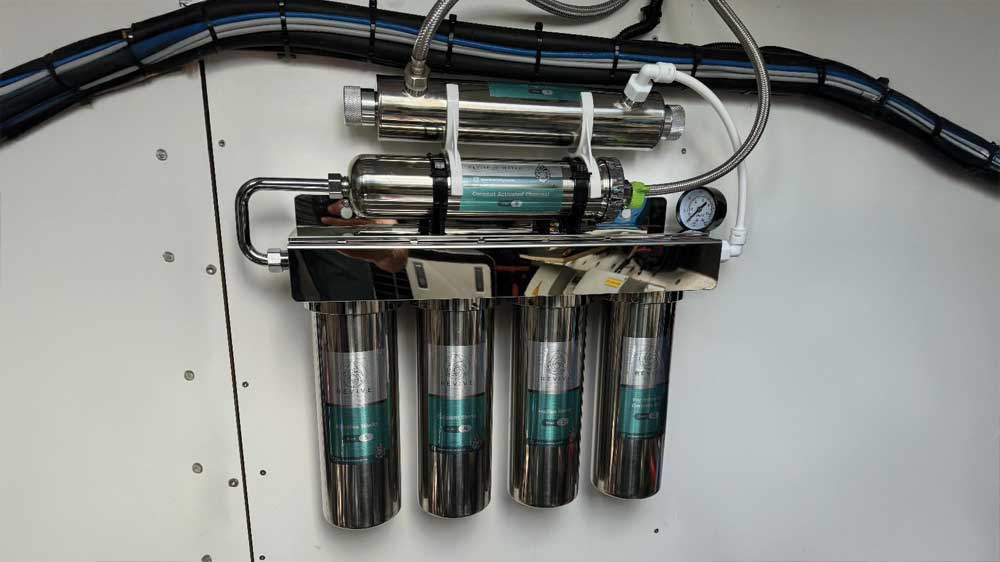
I became obsessed with finding a smarter solution. If bottled water made us feel better because of its mineral content, then why couldn’t we just add those minerals back into our own onboard supply? So I got to work. I started experimenting with mineral cartridges—testing different methods to reintroduce essential elements like magnesium, calcium, and potassium into our RO water. I ordered filter housings online, swapped out mineral blends, and ran countless rounds of taste and performance tests.
By the fourth or fifth version, something clicked. The water tasted noticeably better, had a balanced pH, and—most importantly—it actually kept us hydrated. The crew felt the difference too, and before long, we realized we didn’t need bottled water anymore. That was the breakthrough moment. We had created a system that gave us the benefits of mineral-rich hydration—without the waste. Fast forward a few years, and that DIY project has grown into Revive Water Systems—a solution now trusted by yachts around the world to produce clean, sustainable, mineral-enhanced water right onboard.
How Revive Water Systems Works
Revive isn’t just another water filter—it’s the missing link in yacht hydration systems.
Most yachts rely on two main sources for water onboard:
- Dock Water – When moored, yachts connect to municipal supplies, which can contain chlorine, heavy metals, and other unwanted impurities.
- Desalinated Water (RO Systems) – At sea, reverse osmosis systems create fresh water by removing salt and contaminants—but they also strip away all the beneficial minerals.
Revive is built to complement both.
It integrates directly into existing yacht water systems and elevates the quality of the water onboard by:
- ✔ Reintroducing essential minerals removed by RO, like calcium and magnesium
- ✔ Balancing pH levels for better hydration and wellness
- ✔ Improving taste—making the water crisp, clean, and refreshing
- ✔ Supporting sustainable practices by eliminating the need for bottled water
With Revive, yachts can produce their own premium-quality, mineral-rich drinking water—no plastic waste, no compromise.
Why Every Yacht Needs to Revive Their Water
If you’ve been relying solely on RO water, you might not realize how much better your onboard hydration could be.
Here’s why every yacht should consider upgrading their water system:
- Better Hydration – Mineralized water is absorbed more efficiently by the body, helping crew and guests feel more energized and well-balanced.
- Sustainability – Say goodbye to plastic bottles and reduce your environmental footprint with every sip.
- Premium Water Quality – Enjoy crisp, clean, mineral-rich water that tastes better and supports overall health.
As yacht crew, we spend our lives on the ocean—so it only makes sense that we take care of it. With Revive, we’ve found a smarter way to stay hydrated, reduce waste, and improve onboard water quality in one simple step.
The future of yachting is sustainable, smart, and self-sufficient—and it starts with what’s in your glass.
Revive your water. Revive your health.