

Blog
Reverse Osmosis Water Systems: Marine Desalination for Yachts and Boats and why Marine Watermakers Are Essential.

Why Marine Watermakers Are Essential for Modern Yachts, Sailboats, and Long-Term Cruising
Fresh water is one of the most critical resources onboard any yacht, sailboat, or power boat. Whether cruising offshore, sailing long distances, or spending extended time away from the dock, reliable access to drinking water directly impacts comfort, safety, and independence. This is why marine watermakers, also known as watermaker systems, have become an essential piece of onboard equipment for recreational and commercial vessels alike.
Modern marine watermakers use advanced reverse osmosis water systems and water desalination technology to convert seawater into high-quality freshwater. From compact systems for small sailboats to high-output units for large yachts, today’s watermakers are designed for efficiency, reliability, and adaptability to available space onboard.
This article explains how watermakers work, why they are essential, and how to choose the right system based on production capacity, daily consumption, and vessel type.
What Is a Marine Watermaker?
A marine watermaker is a desalination system installed onboard a vessel that converts seawater into potable fresh water. These systems rely on advanced reverse osmosis (RO) technology, forcing seawater through a semi-permeable membrane that removes salt, contaminants, and impurities.
The result is clean, safe drinking water suitable for cooking, showering, laundry, and general onboard use.
Watermakers are commonly installed on:
- Yachts
- Power boats
- Small sailboats
- Cruisers
- Recreational vessels
How Reverse Osmosis Water Systems Work
At the core of every watermaker system is a high-pressure pump. This pump forces seawater through RO membranes at extremely high pressure, separating salt and contaminants from freshwater.
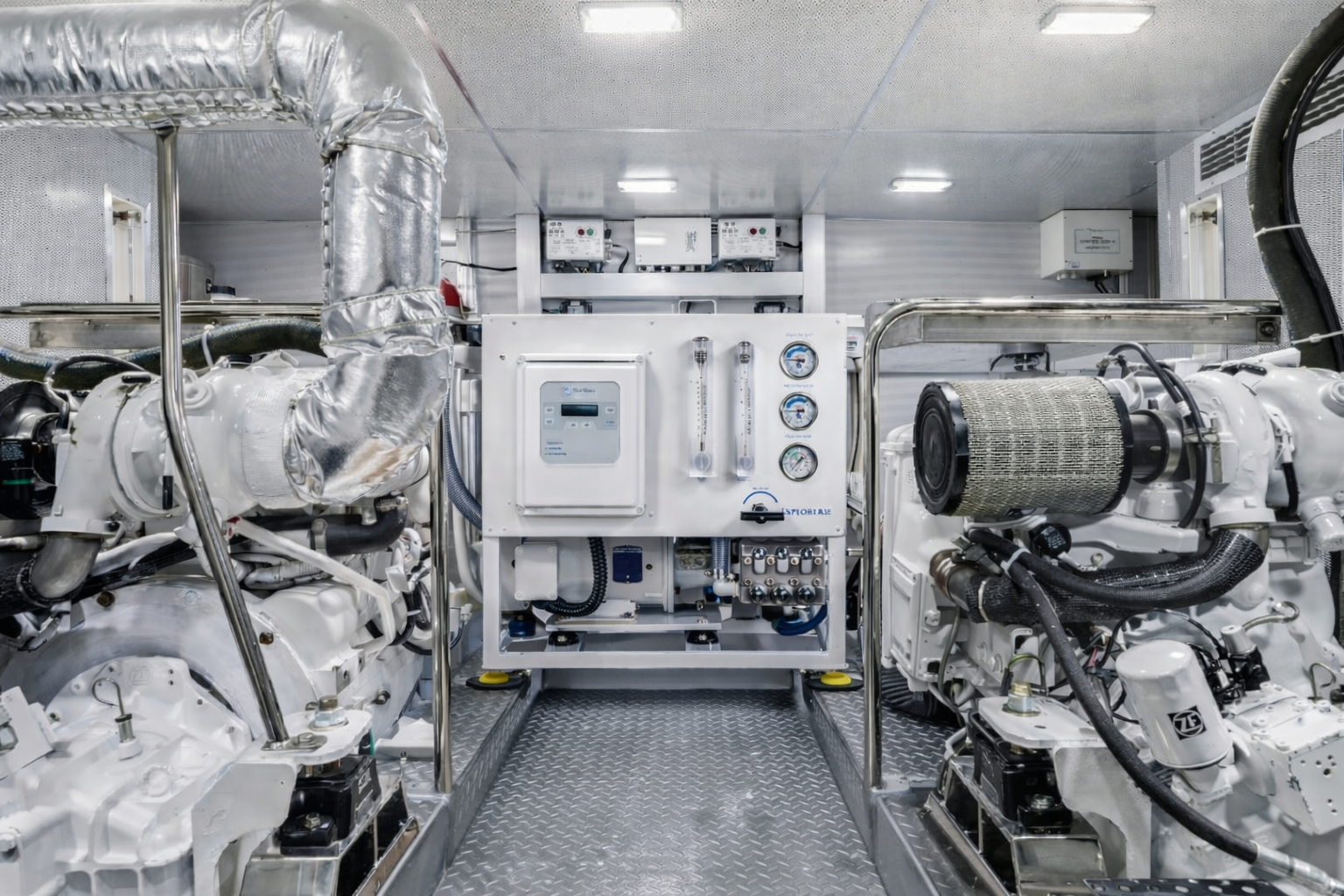
Key Components of a Watermaker System:
- High-pressure pump for seawater pressurisation
- Semi-permeable membrane to remove salt and contaminants
- Pre-filters to protect the membrane
- Control panel or remote control panel for monitoring
- Brine discharge system to expel saltwater waste
Some systems operate on DC or AC power, including 12v systems, making them compatible with generators, shore power, or renewable energy sources.
Why Watermakers Are Essential Onboard
1. Independence from Dock Water
Dock water can vary significantly in quality and may contain unwanted contaminants. A watermaker allows yachts to purify seawater onboard, eliminating dependence on marina water supplies.
2. Increased Cruising Range
For long-term cruising or offshore sailing, carrying large water tanks limits range and adds weight. Watermakers reduce the need to store hundreds of gallons in a tank, freeing space and improving vessel performance.
3. Improved Drinking Water Quality
Watermakers produce high-quality drinking water that is often superior to dock water. Many users report improved taste, fewer contaminants, and better overall water quality.
4. Reduced Daily Water Stress
Knowing your daily consumption is covered allows crew and guests to use water comfortably—showers, laundry, and galley use become routine rather than restricted.
Watermaker Production Capacity Explained
Production capacity is typically measured in:
- Gallons per hour (GPH)
- Liters per hour
- Gallons per day (GPD)
Choosing the right capacity depends on:
- Number of people onboard
- Vessel size
- Daily water consumption
- Sailing vs power boating habits
Typical Examples:
- Small units: Ideal for small sailboats and cruisers
- Mid-range units: Suitable for recreational yachts
- High-output systems: Designed for large yachts and power boats with high daily demand
A system producing even 30–50 gallons per hour can dramatically change onboard life.
Compact, Modular, and Semi-Modular Watermakers
Modern watermakers are designed with available space onboard in mind. Many systems are now:
- Compact
- Modular
- Semi-modular
This allows flexible installation in engine rooms, lockers, or under berths. Semi-modular designs separate components such as pumps, membranes, and control panels, making installation easier and more adaptable.
Energy Efficiency and Power Considerations
Energy efficiency is critical onboard. Many modern watermakers are designed to be energy efficient, reducing load on generators and battery systems.
Options include:
- AC or DC operation
- Low-watt draw systems
- Generator-friendly designs
- Efficient high-pressure pumps
Efficient systems help reduce fuel usage and extend generator life while maintaining dependable freshwater production.
Installation and Maintenance
Installation
Proper installation is essential for performance and reliability. This includes:
- Correct plumbing of seawater intake
- Proper brine discharge
- Secure mounting of pumps and membranes
- Accessible control panel placement
Professional installation ensures optimal performance and long-term reliability.
Maintenance
Routine maintenance includes:
- Filter changes
- Membrane flushing
- System checks after extended downtime
Well-maintained systems deliver dependable performance for years.
Reliability and Build Quality
A marine watermaker must be dependable in harsh environments. Saltwater, vibration, and continuous operation demand high-quality components and reliable engineering.
Key reliability factors:
- High-quality membranes
- Durable pumps
- Proven RO systems
- Availability of proprietary parts and service support
Leading Watermaker Brands
Several respected manufacturers lead the marine desalination market, offering proven reverse osmosis solutions for yachts and commercial vessels.
Blue Water Desalination
Blue Water Desalination is recognised for:
- Compact, energy-efficient watermakers
- Straightforward operation and maintenance
- Reliable fresh water production for sailing yachts and motor yachts
Tecnicomar
Tecnicomar watermakers are known for:
- High-output systems
- Advanced water desalination technology
- Proven reliability on large yachts and commercial vessels
Idromar
Idromar systems offer:
- Robust construction
- Efficient reverse osmosis performance
- Dependable operation for yachts and long-range cruisers
These brands are trusted worldwide for their engineering quality, operational reliability, and long-term support within the marine industry.
Watermakers for Different Vessel Types
Small Sailboats
Compact, low-power units designed for limited space and modest daily consumption.
Cruisers
Mid-range watermakers offering balance between output, energy efficiency, and reliability.
Power Boats and Large Yachts
High-output RO systems capable of supporting multiple bathrooms, laundry, and high guest usage.
Environmental Benefits
Watermakers reduce plastic waste by eliminating bottled water onboard. Modern systems are designed to be eco-friendly, minimising energy use while maximising freshwater production.
Conclusion
A high-quality marine watermaker system is no longer a luxury—it is an essential component for modern yachts, sailboats, and cruisers. With advances in reverse osmosis, energy efficiency, and compact design, today’s watermakers provide dependable, high-quality freshwater wherever your voyage takes you.
By choosing the right system based on vessel size, daily consumption, and cruising style—and by selecting proven brands like Tecnicomar and Idromar—you ensure comfort, safety, and independence onboard for years to come.
If you are planning to upgrade your onboard water system or want to explore reliable solutions for water filtration, desalination, and treatment, it is important to choose products designed specifically for marine environments.
Explore a full range of professional onboard water systems, watermakers, filters, and water treatment solutions at Yacht-Mate, trusted by yacht owners, captains, and engineers worldwide.
Recommended Onboard Water Solutions
The following products are commonly used on yachts to support reliable onboard water production, filtration, and treatment:
- Marine Watermakers – Designed for efficient reverse osmosis desalination on yachts of all sizes
- Onboard Water Filtration Systems – Improve drinking water quality and protect plumbing
- Water Softeners – Reduce scale buildup and extend the life of onboard equipment
- UV & Ozone Treatment Systems – Support safe, clean freshwater onboard
Explore these solutions and view detailed specifications in the Yacht-Mate product catalogue. If you need expert advice – contact us today
To support complete onboard comfort and system performance, Yacht-Mate also provides a curated range of accessories and solutions, including equipment for pool and spa systems, air purification, and flaked ice production, all designed for the specific demands of yachts and boats.
Internal links (as anchors):
As part of regular onboard maintenance, many boats and yachts rely on highly rated mobile cleaning solutions such as Yachtmate’s Clear Mate Mobile to help keep surfaces and systems consistently clean.
Frequently Asked Questions (FAQ)
1. What is a marine watermaker and how does it work?
A marine watermaker is an onboard desalination system that converts seawater into fresh drinking water. Most yacht watermakers use reverse osmosis technology, where seawater is pushed through a semi-permeable membrane under high pressure to remove salt, bacteria, and impurities. The result is clean, potable water suitable for drinking, cooking, and showering onboard.
2. Is reverse osmosis safe for drinking water on yachts?
Yes, reverse osmosis is one of the safest and most effective water purification methods available. Marine-grade reverse osmosis systems remove up to 99% of salts, microorganisms, and contaminants. When properly maintained, a watermaker produces water that meets or exceeds international drinking water standards.
3. How much fresh water can a yacht watermaker produce per day?
Production depends on the system size and yacht requirements. Small watermakers for sailing yachts may produce 30–60 litres per hour, while larger systems for motor yachts can generate several hundred litres per hour. Over a full day, this can range from a few hundred litres to several thousand litres of fresh water.
4. Do yacht watermakers require a lot of maintenance?
Routine maintenance is essential but manageable. Typical maintenance includes flushing the system with fresh water, replacing filters, and periodically cleaning or pickling the membranes. Proper care significantly extends membrane life and ensures consistent water quality.
5. Can a watermaker run while the yacht is underway?
Yes. Most marine watermakers are designed to operate while cruising. In fact, running the system while underway often improves performance because cleaner, flowing seawater reduces membrane fouling. However, operation in very shallow or polluted waters should be avoided.
6. How much power does a marine watermaker consume?
Power consumption varies by system type. Energy-efficient watermakers can run on 12V, 24V, or 230V systems, while higher-output units may require generators. Modern systems are designed to minimise power draw, making them suitable even for yachts with limited energy capacity.
7. Where should a watermaker be installed on a yacht?
A watermaker should be installed in a dry, accessible, and well-ventilated area, such as an engine room or technical compartment. Proper installation ensures easy maintenance, adequate cooling, and optimal system performance.
8. Where can you buy marine watermakers in South Florida?
South Florida is one of the world’s largest yachting hubs, with marine watermakers available through authorised dealers, marine service yards, and specialised online yachting platforms. Resources such as Yachtmate provide educational content and access to a wide range of marine equipment, helping yacht owners and crew research watermaker options, understand specifications, and identify suitable suppliers in the South Florida region, including Fort Lauderdale and Miami.